
TLDR
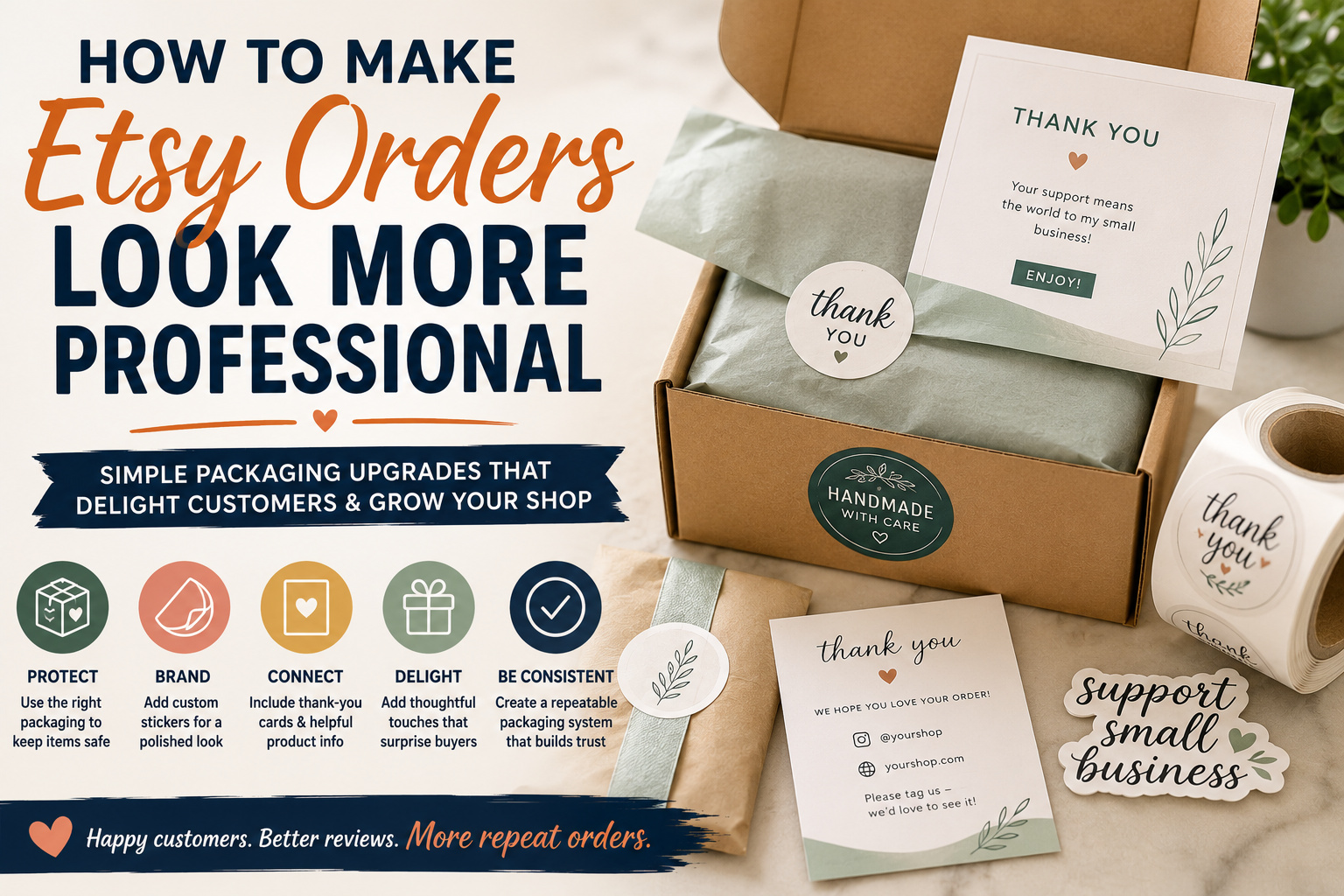
- Start with packaging that protects the product and fits it properly.
- Use consistent colors, fonts, stickers, and printed materials across every order.
- Add one clear brand sticker rather than covering the package in decorations.
- Include a short thank-you card, care instructions, or reorder information.
- Keep shipping labels, tape, tissue paper, and seals straight and tidy.
- Build a packaging system that looks good without slowing down fulfillment.
An Etsy order does not need a velvet-lined box, satin ribbon, and enough tissue paper to wrap a small sofa.
It does need to arrive safely, look intentional, and feel like it came from a real business.
Professional Etsy packaging is usually less about spending more and more about making consistent choices. A plain kraft box can look polished when it fits the product, closes neatly, and uses a well-designed sticker. An expensive mailer can still look careless when it is crushed, overfilled, or covered in mismatched labels.
The goal is not to make every order look luxurious. The goal is to make the product feel protected, organized, and connected to the shop the customer ordered from.
Start With Packaging That Fits the Product
The outer package has one main job: get the product to the customer safely.
Choose a box, rigid mailer, padded envelope, tube, or poly mailer based on the size, weight, shape, and fragility of the item. Packaging that is much too large requires extra filler, increases shipping costs, and allows the product to move around during transit.
Packaging that is too small creates a different problem. Overstuffed mailers can split. Boxes may bulge or arrive with crushed corners. Tissue paper and inserts become wrinkled before the customer even opens the order.
A professional package should:
- Fit the product without excessive empty space
- Protect corners, surfaces, and fragile parts
- Stay closed throughout shipping
- Keep the item clean and dry
- Be easy for the customer to open
- Leave room for required inserts or instructions
Test the full package before using it for customer orders. Pack a sample exactly as you would a real order, close it, shake it gently, and inspect the product again.
For fragile products, mail the sample to yourself or someone you know. Shipping carriers have a way of finding weaknesses that looked perfectly reasonable on the packing table.
Create a Simple Packaging Style
Professional packaging looks connected.
That does not mean every piece has to be custom printed. It means the materials appear to belong to the same business.
Choose a small visual system that can be repeated across different order sizes. This might include:
- One or two brand colors
- One main logo
- One supporting font
- A standard tissue-paper color
- A consistent sticker shape
- One style of thank-you card
- The same tone of voice across printed messages
For example, a jewelry shop might use white boxes, soft gray tissue paper, a dark green logo sticker, and a small cream thank-you card. A colorful stationery shop might use bright mailers, illustrated sticker seals, and playful inserts.
Neither approach is automatically more professional. Consistency is what makes each one feel deliberate.
Avoid buying packaging supplies one piece at a time without considering how they work together. A floral tissue paper, neon mailer, rustic twine, metallic logo, and minimalist card can all look good individually while creating a package that feels assembled from five different businesses.
Brand Plain Packaging With Custom Stickers
Custom-printed boxes can look polished, but they are not always practical for an Etsy shop.
They may require larger order quantities, take up storage space, and become unusable if the logo, colors, product line, or business information changes. Shops that sell products in several sizes may also need multiple box formats.
Stickers provide a more flexible option.
You can place a custom logo sticker on:
- Kraft shipping boxes
- Rigid mailers
- Paper shopping bags
- Glassine envelopes
- Poly mailers
- Tissue paper
- Product sleeves
- Candle jars
- Shipping tubes
- Thank-you cards
Custom product and packaging stickers can be made in different sizes and shapes, allowing the design to fit the package rather than forcing every logo into the same generic rectangle.
A sticker can also work as a seal across the box flap or tissue-paper fold. This adds branding while giving the customer a clear opening point.
Keep the design readable. A packaging sticker usually needs one main logo or message, not the shop name, website, email, social media handles, QR code, phone number, slogan, and full origin story squeezed into two inches.
Use Roll Labels for Repeated Packing Tasks
Individually cut stickers work well for customer giveaways and prominent brand marks. Roll labels are usually easier when the same sticker is applied to every order.
A roll is simple to store at a packing station. Labels peel quickly, remain organized, and can be applied without creating a stack of loose backing papers.
Roll labels work well for:
- Tissue-paper seals
- Thank-you stickers
- Product names
- Scent or flavor labels
- Package inspection marks
- Size labels
- Care reminders
- Inventory codes
- Return-address branding
CustomStickers.com offers custom sticker rolls for packaging and product-label applications. Roll labels make particular sense once a shop is packing enough orders that peeling and sorting individual stickers begins to slow the process.
A two-inch circle is a practical starting point for many tissue seals, box labels, and general branding uses. Smaller labels work for product variations and internal inventory systems. Larger rectangles provide more room for instructions, ingredients, or product details.
Wrap the Product Neatly
Tissue paper can make an order feel finished, but only when it is used with some restraint.
Fold the tissue around the product rather than crumpling several sheets into the box. Keep printed patterns facing the correct direction. Seal the final fold with a small logo or thank-you sticker.
For products that may snag, scratch, leak, or transfer color, use an appropriate protective layer before adding decorative tissue. Glassine bags, clear sleeves, cotton pouches, or product boxes may provide better protection.
Wrapping materials should not create work for the customer. Too much tape, string, confetti, or filler can turn a pleasant unboxing into cleanup.
Confetti is especially risky. It photographs nicely right up until the customer opens the package over a carpet.
Include a Useful Thank-You Card
A thank-you card gives the order a human touch and provides a clean place for information that does not belong on the product label.
The message can be simple:
Thank you for supporting our shop. Your order was packed by hand, and we hope you enjoy it.
A useful insert might also include one next step:
- Product care instructions
- How to contact the shop for support
- A reorder link
- A QR code leading to instructions
- A social media handle
- A referral offer
- A future-purchase discount
- A polite review reminder
Do not ask the card to do everything. Four social icons, two discount codes, a referral program, a product tutorial, and a long brand story will make the important message harder to find.
Custom note cards can be used for branded thank-you notes and package inserts. A printed card with room for one handwritten line provides a useful balance between consistency and personalization.
The handwritten part does not need to be elaborate. Adding the customer’s first name or writing “Thank you, Sarah” can make the card feel personal without adding several minutes to every order.
Add Care Instructions When the Product Needs Them
A professional order should answer predictable questions before the customer has to send a message.
Care instructions are especially useful for:
- Candles
- Jewelry
- Apparel
- Ceramics
- Art prints
- Plants
- Bath products
- Leather goods
- Reusable drinkware
- Handmade toys
- Decals
- Personalized products
Instructions should be clear and specific. “Handle with care” is vague. “Hand wash with mild soap and dry immediately” gives the customer something useful to do.
Short instructions may fit on a product sticker. Longer directions are better on an insert card or a webpage linked through a QR code.
Also explain anything the customer might mistake for a defect. Mention protective films, natural material variations, settling during shipping, assembly steps, or temporary marks caused by packaging.
That small explanation may prevent a support message or poor review later.
Make Product Labels Easy to Read
Products such as candles, cosmetics, soaps, food items, and bottled goods often need labels that do more than identify the shop.
A product label may need to include:
- Product name
- Size or quantity
- Scent, flavor, or variation
- Ingredients
- Warnings
- Directions
- Storage instructions
- Batch information
- Business details
Do not shrink the type until everything technically fits. Tiny text makes a label look crowded and can prevent customers from finding information they need.
Use a larger label, simplify the wording, or divide the content between front and back labels.
The label material should also match the product. Items exposed to oil, water, condensation, or repeated handling need more resistance than products kept dry inside a box. Test labels on the actual container before ordering a large batch, especially when using curved jars, squeezable bottles, textured plastic, or refrigerated products.
Include a Sticker the Customer Can Keep
A free sticker is a small extra that works particularly well for Etsy shops built around artwork, hobbies, fandoms, humor, outdoor products, stationery, or recognizable mascots.
But the giveaway should be something the customer might genuinely use.
A small advertisement with the shop URL in oversized letters is unlikely to earn a place on a laptop or water bottle. A useful giveaway could feature:
- A shop mascot
- A popular illustration
- A short phrase
- A design related to the product
- A collectible seasonal variation
- An icon from the shop’s branding
- A small version of the purchased artwork
Durable custom vinyl stickers are better suited to customer giveaways than thin packaging labels because they can handle more wear after leaving the box.
Giveaway stickers do not need to be added to every product. They may make more sense for larger orders, repeat customers, seasonal campaigns, or purchases above a certain value.
Make Gift Orders Easy to Recognize
Many Etsy purchases are gifts. Packaging should account for that possibility.
Allow customers to mark an order as a gift or include a short gift message when your workflow supports it. Avoid putting prices inside the package unless required for another reason.
A gift order might include:
- A clean gift note
- A neutral product insert
- Extra tissue or a product sleeve
- A blank area for the recipient’s name
- Care instructions that do not assume the buyer is the user
Keep gift packaging manageable. You do not need to redesign the entire order. A different card and one small wrapping change may be enough.
Make sure gift messages are matched to the correct order. A beautiful card addressed to the wrong person is memorable, just not in the intended way.
Keep the Shipping Label and Tape Straight
Some of the least glamorous details have the greatest effect on presentation.
Place the shipping label squarely on the package. Smooth out wrinkles. Do not cover barcodes with glossy tape unless the carrier allows it and the code remains easy to scan.
Cut packing tape cleanly and use enough to secure the box without wrapping it repeatedly in every direction. Remove old labels when reusing boxes and cover unrelated barcodes completely.
Check that:
- The box closes evenly
- The mailer is not overfilled
- The shipping label is readable
- No label edges are lifting
- Tape does not cover important text
- The return address is correct
- The package is free of dust, fibers, and stray adhesive
Customers may not consciously praise straight tape. But they notice when a package looks rushed.
Avoid Packaging That Creates Problems
Professional packaging is not the same as complicated packaging.
Avoid adding materials simply because they appear in popular unboxing videos. Some common extras can create practical issues.
Loose Glitter and Confetti
These materials spread easily, cling to products, and can create a mess in the customer’s home.
Strong Scents
Perfume, scented tissue, and fragranced fillers can transfer to the product or bother customers who are sensitive to fragrance.
Food or Candy
Edible extras may melt, trigger allergies, conflict with dietary restrictions, or be inappropriate for international shipping.
Excessive Plastic
Some products require plastic protection, but unnecessary layers can make the package feel wasteful.
Too Many Inserts
Several cards and flyers can make a small handmade order feel like direct mail. Include only the pieces that help the customer.
Unrequested Product Samples
Samples can be useful, but they should be clean, sealed, relevant, and safe to ship with the purchased item.
Build a Repeatable Packing Station
The most professional packaging system is one you can repeat accurately.
Organize supplies in the order they are used:
- Product and protective wrapping
- Product labels
- Tissue paper or interior packaging
- Thank-you cards and instructions
- Giveaway stickers
- Shipping boxes or mailers
- Tape and shipping labels
Create a simple packing checklist for custom orders, gift orders, fragile products, and international shipments.
Keep frequently used stickers and cards within reach. Store seasonal materials separately so outdated inserts do not accidentally appear in a current order.
As order volume increases, reduce unnecessary steps. A ribbon that takes 45 seconds to tie may not seem significant until you have 80 packages waiting.
Professional packaging should support the business, not quietly consume the entire afternoon.
Check Every Order Before It Leaves
Before closing the package, confirm:
- The correct product and variation are included
- Personalization is spelled correctly
- The item is clean and undamaged
- Required accessories are present
- Care instructions are included
- The gift message matches the order
- The package insert is current
- The customer’s address matches the shipping label
- The product cannot move or break in transit
- Old promotional codes have been removed
A final check matters more than decorative details. Customers may forgive simple packaging. They are less likely to overlook the wrong size, a misspelled name, or a missing component.
Professional Packaging Should Still Feel Like Your Shop
There is no single correct way to package an Etsy order.
A handmade ceramic mug should not necessarily arrive like a delicate jewelry set. A colorful art print shop does not need to copy the neutral packaging of a minimalist candle company.
Start with protection. Add a clear visual system. Use stickers and inserts where they make the order easier to understand or more enjoyable to open. Then make sure the process can be repeated without slowing every shipment.
That is what makes Etsy orders look more professional: not extra decoration, but evidence that someone paid attention.